
Follow Manhattan Address-to-Owner Route
Start in the Department of Finance Property Information Portal. Resolve the Manhattan address and save the BBL it returns. Read the Property Owner field on the result. Then pull the most recent relevant ACRIS deed and check that the grantee matches. The tax card is the fast lead; the recorded deed supplies the transaction evidence.
| Step | Official source | Evidence saved |
|---|---|---|
| Identify the lot | PIP | Address and BBL |
| Read tax owner | PIP Property card | Property Owner, class, type |
| Confirm transfer | ACRIS | Latest deed, grantee, CRFN |
| Resolve conflict | Document image and references | Dates, roles, corrections |
Locate Manhattan Property Owner Field
The Property Information Portal offers no standalone owner-name search. Instead, look up an address, BBL, block, condo, co-op, REUC, air lot, or subterranean lot. The Property card on the result shows the tax-record Property Owner beside its parcel facts, though it remains an annual tax-account snapshot rather than a guaranteed title conclusion. The official PIP search choices show every route.
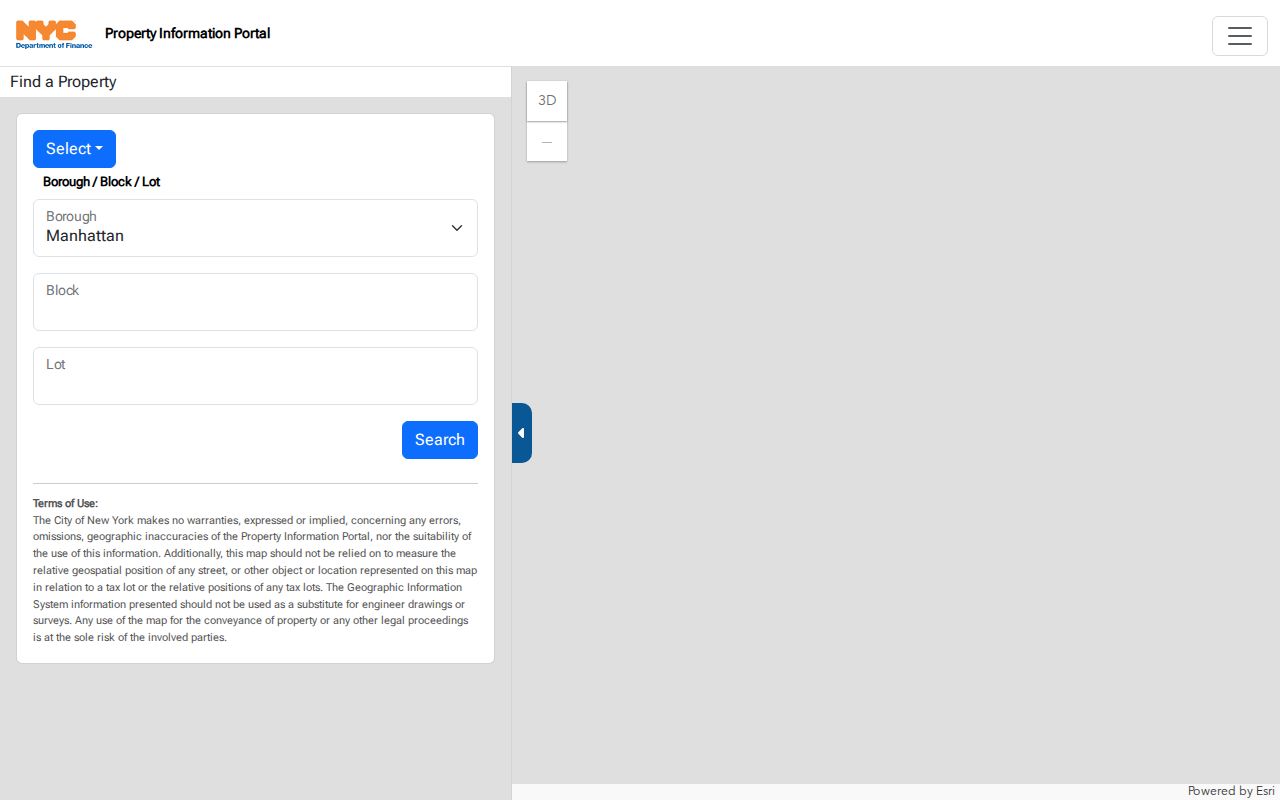
The BBL from that result is the key for the deed confirmation.
Confirm Who Owns Manhattan Property in ACRIS
In ACRIS, enter borough 1, block, and lot. Open the newest deed that actually conveys the interest. Compare the grantee, document and recording dates, CRFN, BBL, legal description, and references before trusting any name. A mortgage, assignment, satisfaction, or lien can list parties without moving ownership, and the ACRIS detail view explains what each indexed field means.
Read the image when corrections or fiduciary deeds appear.
Investigate a Manhattan LLC Owner
Search the exact entity in the ACRIS business field. Try reasonable name variants too. The New York Department of State public inquiry then shows current and former entity names, status, jurisdiction, service address, and filing history. Corporate records help separate similarly named entities. A service address or listed agent still does not prove who owns real estate.
Handle Trusts, Estates, and Fiduciary Deeds
A trustee, executor, administrator, referee, or estate can appear anywhere in the chain. Check the party role. Match it to the deed type. Consult Surrogate or Supreme Court records when authority or a court-ordered transfer matters. Never substitute a decedent's old tax name, a beneficiary, or a mailing contact for the grantee named in the operative instrument.
Separate Situs and Mailing Addresses
The situs address simply locates the property. The tax mailing address is where DOF sends notices, and it may sit elsewhere. A deed relies on a legal parcel description and can list additional party addresses, so compare the BBL and document role rather than assuming the mailing destination marks occupancy. Differences can be ordinary.
Resolve an Empty or Stale Owner Card
A blank PIP result may lag a recent recording. Search the BBL directly in ACRIS. Inspect former lots and the block-wide lot 0000, review tax-map changes, and fall back on City Register counter or Land Records Research Library materials when needed. No fixed deed-to-roll lag exists, so date-stamp both searches.
Monitor a Manhattan Address for New Documents
The free Notice of Recorded Document service accepts an address or BBL and sends email or text alerts about later filings. Registration is simple. The official notice registration form lists every required field.
An alert prompts inspection, not a finding of ownership.
State a Careful Manhattan Owner Conclusion
Record the access date, address, BBL, and PIP owner. Add the deed type, grantee, CRFN, and recording date. When the sources agree, describe the result as the apparent owner of record as of that date. When they conflict, report the discrepancy rather than selecting the more convenient name.
Lawful use. Owner records support property research and due diligence; they do not justify harassment, tracking, or claims about who lives at an address.
Test Difficult Manhattan Ownership Patterns
A recent transfer is the simplest conflict. PIP may still show the seller while ACRIS already indexes a deed to the buyer. Preserve both access dates. No fixed roll-update deadline exists, so identify the newer grantee without claiming one. A correction deed or a deed recorded after closing can reorder the apparent sequence. Follow document references rather than sorting by date alone.
Special ownership forms demand precise language. A cooperative resident usually holds shares and a proprietary lease. The cooperative entity owns the real estate. A condominium unit may have its own lot within a larger building. A life estate divides present possession from the future interest. A trustee, executor, or referee may convey in a representative capacity. The owner answer must describe the actual interest searched.
Historical searches add another layer. A modern BBL may have replaced older lots, and the address itself may have changed. Use tax-map history and block-wide ACRIS first. When the chain predates 1966, move to the Land Records Research Library. Older descriptions can then redirect the work into City Register libers. Municipal Archives reindexing aids, directories, and historical maps also assist.
Other records can help, each in its lane. A business filing supports an entity-name check. A permit shows its own applicant or owner field. A court case can explain a referee or estate transfer. None replaces the operative deed and parcel match.
State plainly what the search did and did not cover. If the work stopped at PIP, call the result only the displayed tax owner. Nothing more. An ACRIS review lets you cite the latest deed and its date. It still cannot rule out every encumbrance or off-record interest. Old lot numbers, trusts, estates, and cooperative structures deserve a named limitation. Each one can blur who truly holds title in New York County. A narrow conclusion beats a broad claim.
Handle the finished owner worksheet with care. Owner names appear in the public property records. Copying contact details or protected address information adds risk without helping parcel research. New York runs an Address Confidentiality Program. It gives qualifying participants a substitute address and mail forwarding. Rely on the least personal information needed. Use it to tell the recorded parties apart and describe each property interest.
Note: Recheck the official sources before trusting an older worksheet, since a new deed or administrative update can change the owner of record.