
Compare Three Manhattan Property Value Numbers
A Manhattan property value search can hand back several numbers. Each carries a distinct meaning. DOF market value serves as an assessment estimate. Assessed value then applies the legal assessment level plus any related limits. A recorded sale amount is pure transaction data in PIP or ACRIS. Substituting one for another leads to bad conclusions.
| Value type | Meaning | Official record |
|---|---|---|
| Market value | DOF estimate for assessment | NOPV, roll, PIP |
| Assessed value | Value after statutory assessment level | Assessment card and roll |
| Taxable value | Value after applicable adjustments | Exemption and bill records |
| Recorded sale | Consideration reported for a transfer | PIP Sales and ACRIS deed |
Apply New York City Assessment Levels
Class 1 property is generally assessed at 6 percent of market value. Classes 2, 3, and 4 use a 45 percent level. Caps and transitional values can shift both. Know the tax class before comparing any ratios. A co-op, a condo, a rental building, and a utility parcel each follow a different practical path. So does a one-family home, through the assessor's math.
Read Ten Years of Manhattan Assessment History
PIP can show fiscal year, building and tax class, land value, improvement value, total assessed value, and percentage change across up to ten years. Keep the roll stage and field consistent throughout. A sharp swing may point to a physical alteration, a classification issue, a phase-in, or a data correction rather than any equivalent move in likely sale price. The official PIP search opens the parcel routes that reach this assessment history. Pull the whole span before judging a single year.
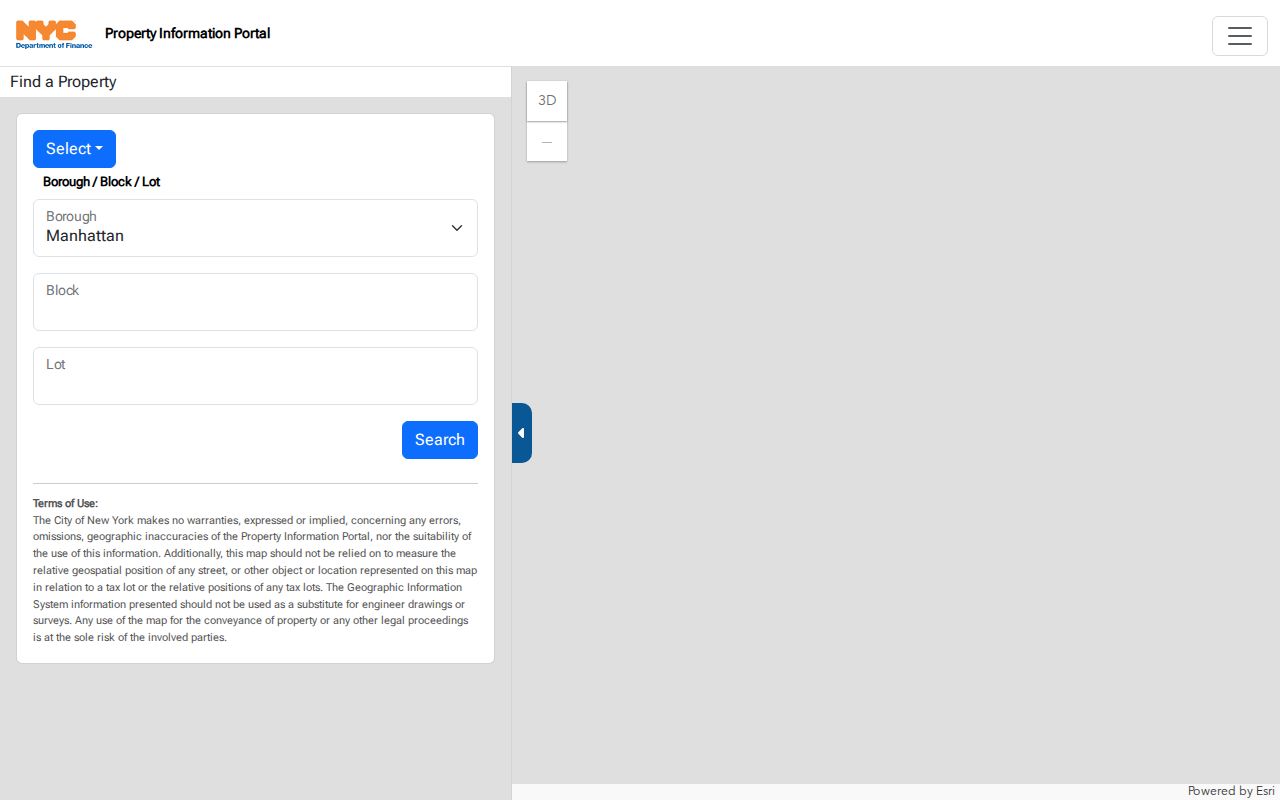
Special parcel modes exist for a reason. They keep a condo, co-op, air lot, or subterranean lot from being weighed against the wrong account.
Find the Recorded Manhattan Sale Price
PIP Sales gives a quick transaction view. ACRIS detail goes deeper, showing document amount, parties, document date, recording date and time, CRFN, and parcel data. Always read the deed image and its transaction context. Partial-interest transfers, related-party conveyances, fiduciary deeds, and other non-market events can make recorded consideration a poor comparable. The ACRIS detail guide explains the transaction fields.
Match the BBL and document type before using an amount as a sale observation.
Explain Why Manhattan Sale and Market Values Diverge
Assessment models rely on annual tax-administration methods and fixed valuation dates. A sale captures one transaction. Its timing, financing, interest conveyed, and party circumstances differ. Statutory levels and caps then pull assessed value further from both figures. Each number can be accurate in its own records. It can still differ substantially.
Keep Exemptions Separate From Sale Value
An exemption card lists exempt assessed value, taxable assessed value, fiscal year, and code or type. Exemptions change taxation under their own rules. They never reduce the consideration written into a deed. Abatements and transitional values deserve separate labels too, rather than getting folded into one generic value.
Use FY27 Trends as Context, Not an Appraisal
FY27 material describes citywide roll signals and current assessment administration. That broad movement offers context only. It cannot establish the market value of a Manhattan parcel. Rely on the account's own history, tax class, physical facts, and recorded sales. State each source's date.
Compare Distinct Manhattan Property Types Carefully
A Greenwich Village house may carry landmark and planned-suburb context. A Carnegie Hill lot may sit in detached or semi-detached zoning patterns. A Chelsea unit ties into a large cooperative development. It also carries that development's billing structure. Match tax class and unit form first. Then match parcel identity and restrictions before any comparison earns its keep.
A Manhattan Property Value Is Not an Appraisal
A public assessment supports taxation. A GIS record describes an administrative lot. ACRIS reports a recorded transaction. None includes the inspection, market analysis, title review, or survey work behind other professional conclusions.
Value limit. Assessed value is a tax measure and does not state what the property would sell for today.
Build a Date-Matched Manhattan Value Comparison
Start with the subject's BBL, tax class, parcel type, and assessment fiscal year. Record DOF market value, assessed value, and taxable value as separate fields. Then layer in any exemption and transitional-value information. That discipline keeps a reduced taxable amount from being retold as a falling market estimate.
For a sale, pull the deed amount together with its document date, recording date, and parties. Also capture the interest conveyed and the CRFN. A nominal, related-party, estate, referee, or partial-interest transfer is a different animal. It deserves no casual comparison with an ordinary arm's-length sale. The deed image and its related documents hold context a result row omits. A result row alone cannot supply it.
Comparables should share more than a neighborhood name. Match tax class, building form, unit structure, lot size, and the relevant date. Greenwich Village landmark context, Carnegie Hill lot patterns, and Chelsea's cooperative structure tell the story. Manhattan properties sitting near one another can demand different interpretation. No broad citywide roll trend erases those differences.
Document the source vintage for every figure. Annual assessments follow a valuation and roll cycle. ACRIS reports recorded transactions. MapPLUTO reflects a published dataset release. A value worksheet that mixes years without labels can manufacture a false trend. Stating each date keeps the comparison transparent. It also signals when a fresh appraisal or inspection is needed.
Permits and violations explain value changes. A renovation can move the market's view of a lot. A new certificate or an open violation can too. BIS and DOB NOW are regulatory sources, though, not appraisal reports. Before treating any date as context, match the BBL and BIN to the parcel you are tracking. Then the records describe the same account.
Assessment review works differently from appraisal. A DOF Request for Review or a Tax Commission application challenges an administrative assessment. Each works under that agency's rules. It sets no asking price and guarantees no private valuation. For tax relief, follow the current form, tax class, deadline, and evidence requirements. For an opinion of market value, bring in a qualified appraisal instead.
A careful value report labels every number with its source and date. It names the parcel type and tax class. It explains any exemption and notes whether a sale looks market-based. It never stretches a citywide percentage across a single lot. Those habits keep public property value records useful without overstating their precision.