
Read Manhattan Current Owner Record Card
The NYC Property Information Portal prints the tax-account name under the exact label Property Owner. Copy it exactly. Grab the BBL too. Add the property type, tax class, and access date, since those surrounding facts confirm the right parcel was opened before the newest recorded deed settles the owner question.
Keep one row per parcel. Owner-of-record worksheet: Manhattan BBL; situs address; PIP Property Owner; tax class; access date; latest ACRIS deed; grantee; CRFN; recording date; discrepancy note.
Judge How Current the DOF Roll Is
DOF works through an annual Notice of Property Value. It also runs a tentative and final assessment-roll cycle. Timing is loose. A deed recording and a PIP owner update have no set gap in days. A recent closing can appear in ACRIS first. Date-stamp both. Then open the card through the PIP interface. It provides the address and parcel routes.
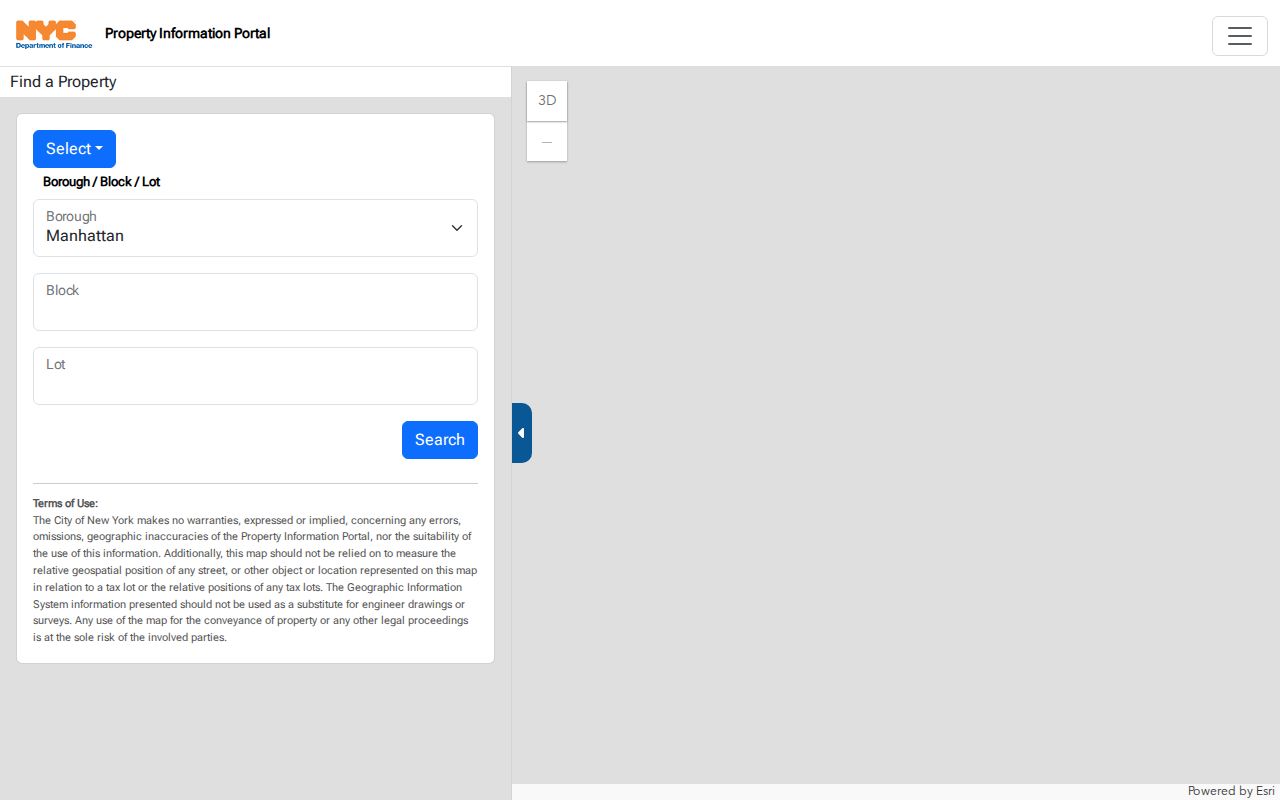
Save the chosen autocomplete address and resulting BBL to avoid comparing different lots.
Let a New Manhattan Deed Correct an Older Tax Card
Start in ACRIS with the exact BBL. Find the newest deed conveying the relevant interest. Then compare details. Check the grantee, document date, recording date and time, CRFN, parcel, and legal description against the tax card. A newer deed can be stronger evidence of a recent transfer than an unchanged tax owner field, though a real title conclusion may require more than the web index.
Distinguish Manhattan Address Types
Three addresses travel with Manhattan parcels, and they need not match. The situs address marks the physical property. A mailing address receives tax notices. The deed's legal description identifies the conveyed parcel, and cooperative units, condos, air lots, and subterranean interests sharpen the difference, so lean on the BBL and parcel type as the stable bridge.
Use Recent Sales and Document Cards as Checks
PIP offers quick cross-checks. It can show recent sales and up to 50 recorded-document rows, though that is never a full chain of title. Open ACRIS itself. Pull the CRFN. Full party roles, dates, parcel information, references, and the recorded image all live there. A lender or assignee can dominate a record without owning it, and the ACRIS field inventory shows what a selected record can return.
Corrections and referenced documents may explain a spelling, party, or parcel discrepancy.
Separate Assignments and Satisfactions From Ownership
Not every recorded document conveys ownership. An assignment can move a mortgage or another recorded interest, and a satisfaction can release one. Neither is automatically a deed passing fee title. Check document class, party type, linked instrument, and legal parcel before any name joins the current owner worksheet.
Resolve LLC, Trust, Estate, and Same-Name Owners
Entities and humans need different fields. Use ACRIS's business field for an LLC. Use the individual fields for a person, matching role, address, date, document type, and BBL. New York entity filings confirm formal names and filing history. Court or Surrogate records may explain fiduciary authority. But none of it substitutes for the deed itself.
Correct Manhattan Owner and Billing Information
DOF offers owner-update and tax-bill correction routes. Use them. A deceased owner, a mailing change, or third-party billing each has its own form, and a correction request is administrative rather than a quiet-title action, so keep the submission evidence.
Protect Privacy in a Current Owner Search
New York runs an Address Confidentiality Program. It gives qualifying participants a substitute mailing address and mail forwarding. Public parcel research must never defeat it. Report only what the property record itself requires, and never use it to find where a person lives.
Owner limit. A date-stamped tax and deed comparison is research evidence, not permission to contact, track, or harass a person.
Resolve a Manhattan Current Owner Discrepancy
Rule out a parcel mismatch first. Confirm the address PIP selected. Check the borough 1 BBL, parcel type, and any condo or cooperative identifier. Then compare tax owner and grantee. A gap from a recent recording is not a gap from pulling a billing lot instead of a unit.
Next, read the document sequence. A correction can repair a grantee name or parcel description. A referee deed can follow foreclosure litigation. An executor or trustee can sign in a fiduciary capacity. A mortgage, assignment, or satisfaction can put a prominent name on the record without conveying title, so the roles and document class decide the meaning.
Entities take one path. Use the ACRIS business search and the state corporation database to confirm formal and former names. People take another. Compare middle initials, suffixes, party addresses, and dates, and never settle a same-name problem with an unsupported assumption about residence. The BBL and linked instrument are stronger discriminators.
End with a dated statement of limits. Note that PIP showed one owner on the access date and ACRIS a later deed to a named grantee on its recording date, preserving both facts for whoever rechecks next.
The PIP Sales and Documents cards are a starting point, not a title chain. Their rows are limited. Open the chosen ACRIS entry. Read the instrument image, and follow any corrections or references it cites. Even when the tax card and deed agree, keep the dates. A later filing can change the answer.
Keep current owner research separate from occupancy questions. A mailing address may simply route notices to an agent, a business, or another location. A permit applicant could be a contractor or representative. Voter, directory, and license entries serve their own programs and prove nothing about title. Leaving those sources out of the ownership conclusion cuts down on same-name errors and protects privacy.
When the owner believes the tax record is wrong, the DOF update procedure can help. It covers qualifying owner, deceased-owner, mailing, and billing matters. It will not settle a disputed deed or a judicial title question. Save the submitted form and its confirmation. Then recheck the official account instead of assuming the change went through.