
Trace Former Manhattan Property Owners Backward
Work backward through the grantor-grantee chain. A single current tax card will not do it. Start with the newest deed for the subject BBL, and note its grantee and grantor. Then locate the deed by which that same grantor first acquired the parcel. Repeat the process at each step. Check dates, legal descriptions, old lots, and any referenced corrections along the way.
| Transfer date | Grantor to grantee | Deed type | CRFN or book/page |
|---|---|---|---|
| Newest | Prior owner to current grantee | Verify in image | Record exact identifier |
| Earlier | Earlier owner to prior owner | Verify in image | Follow references |
| Historic | Indexed book parties | Check jurisdiction | Book, page, reel |
Use the 1966 ACRIS Starting Point
Manhattan deed records go back to 1966 in ACRIS. Search by BBL first. Then search by each former owner's name and role. Note the CRFN, document and recording dates, parties, parcel fields, references, and images. That online starting point is a cutoff, though, not the beginning of the property's chain. The ACRIS portal opens the official document-search routes.
Use its party and parcel results together to reduce false matches.
Search an Old Manhattan Lot and Name Variant
Tax lots change over time. Search the current BBL and any former lot shown in map history. Also search the block-wide lot 0000. Try reasonable individual and business-name variants too. Demand matching roles, dates, and parcels before accepting a hit. A same-name party elsewhere in Manhattan proves nothing about former owners.
A grantor conveys the property. A grantee receives it. The reverse index is a name route for working back through the records. The chain of title links every valid conveyance in sequence.
Continue Before 1966 at the Land Records Library
Before 1966, the trail moves to the Land Records Research Library. Older deed books, indexes, reels, maps, and alteration books carry the chain from there. Record every book, page, reel, party spelling, and legal description as you go. Certified copies follow one procedure. Counter-copies follow another. Printing a free ACRIS image is the simplest path of all.
Time-depth limit. A chain that reaches 1966 is not complete when the research question concerns earlier former owners.
Account for Manhattan Annexation and County Creation
A Manhattan chain can slide from a current BBL into an old block, street-side distance, liber, reel, or farm description. Jurisdictions shifted as the city grew. Let the instrument date and its exact description guide which City Register, Municipal Archives, and map sources come next.
Bridge Estate and Foreclosure Chain Breaks
Executors, administrators, trustees, and referees can all convey property. When a familiar owner vanishes from the next deed, look into Surrogate or Supreme Court files, foreclosure records, judgments, and the later fiduciary or referee deed. A lis pendens or judgment may explain litigation, but it does not by itself identify the next owner of record.
Check New York County Estate Files When a Deed Chain Pauses
A gap in a Manhattan deed chain often points to probate. The Surrogate's Court handles those estates. Start with the official WebSurrogate search to find the estate file behind a fiduciary transfer.
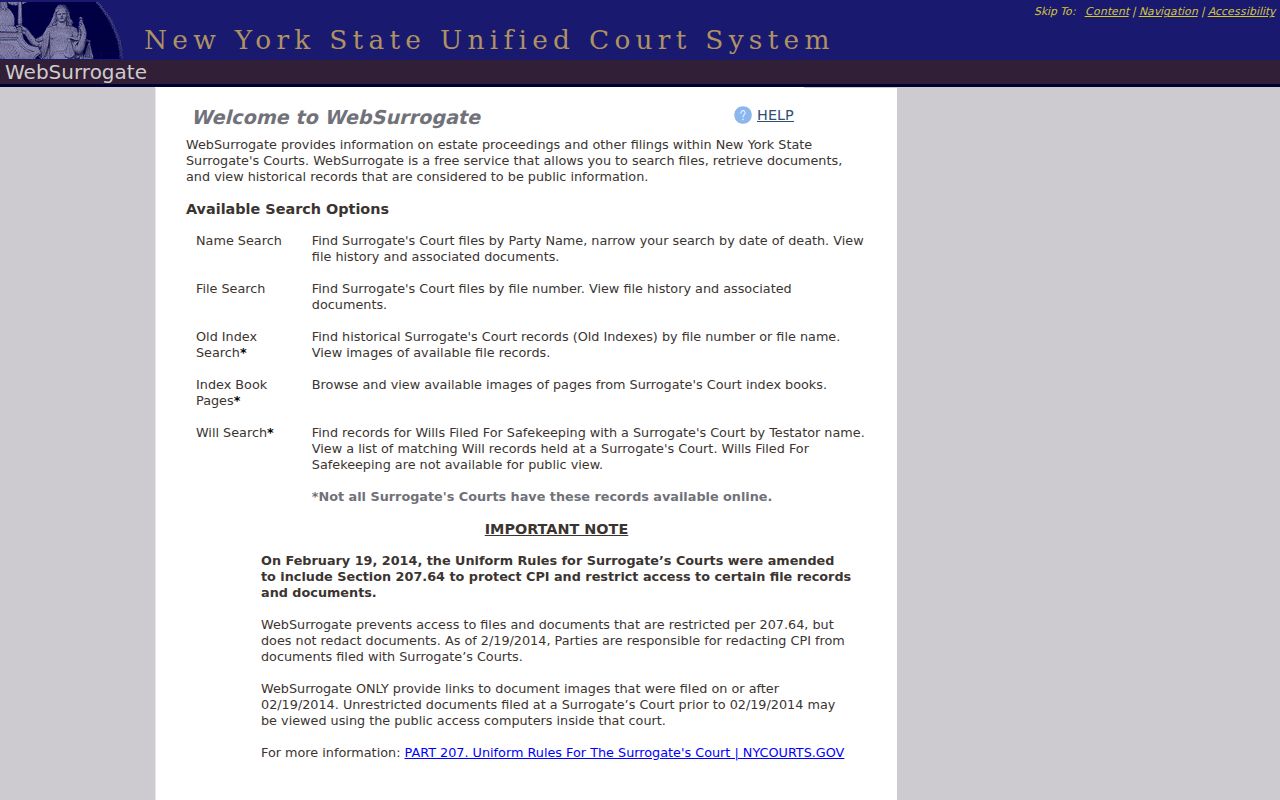
Online coverage begins in 1964. It runs incomplete for 1980 through 1989, so older or missing files may require the Surrogate's Court record-search process.
Use Manhattan History as a Clue, Not Title Proof
Tax photographs, directories, historic maps, landmark files, and the partial 1890 Police Census can tie occupants, structures, and addresses together across time. Greenwich Village plans, Chelsea development records, and neighborhood studies may explain a tract's identity or a renumbering. These sources enrich a house history. They do not replace the recorded deed chain as proof of ownership.
Use the NYPL Directory Collection Without Confusing Occupancy and Title
The New York Public Library directory collection traces old Manhattan addresses and names.
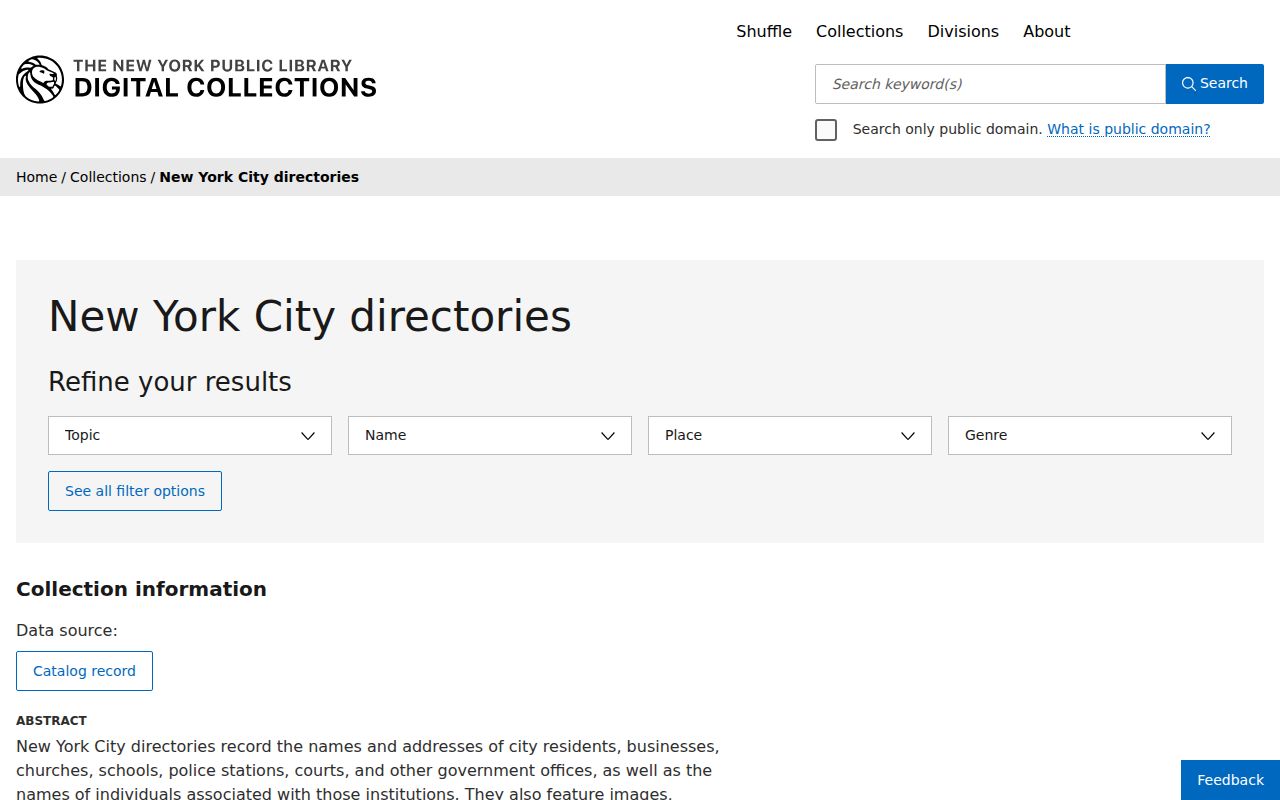
A directory entry can support an address history or a spelling lead. The City Register deed chain remains the true ownership evidence.
Mark Uncertain Former Owners Honestly
Missing volumes, an unverified image, inconsistent legal descriptions, name collisions, and unexplained lot changes belong on the record as gaps. Never bridge them with assumption. A useful prior-owner timeline separates confirmed conveyances, supporting clues, and unresolved intervals.
Chain limit. Web indexes support research, but a complete legal title examination may require certified records and professional review.
Audit Every Link in a Manhattan Former-Owner Chain
A clean timeline needs the same parcel interest at every step. Compare the BBL and legal description, but also watch for former lot numbers, partial interests, condo declarations, and cooperative structures. When one deed covers several lots, record which part supports the subject chain. When a map alteration intervenes, cite the map history beside the transfer.
Party names can shift without any transfer. Marriage, initials, suffixes, spelling, entity renaming, mergers, and trust captions all change the indexed form. Search those variants, but connect them through address, role, dates, references, and parcel evidence. A shared name alone is too weak to place someone on a former-owner list.
Probate and foreclosure events create gaps a normal deed search cannot explain. A Surrogate file may establish an executor's authority. A Supreme Court case may lead to a referee deed. A judgment or lis pendens may explain timing. The eventual recorded conveyance belongs in the ownership chain. The case file supplies the supporting context.
Older house-history sources deserve an evidence label too. A directory or police census can suggest occupancy. A tax photograph can show a structure. A development plan can connect an old tract name. None of them proves the fee owner of record. Keeping confirmed owners separate from possible occupants makes the final history more useful. It also makes it more honest.
Map history often bridges two owners who otherwise seem like a clean match. PIP reports cover affected lots. They also show the authority behind a change. Effective or end dates appear for covered map changes since May 2008. Alteration books carry the older work. Cite the change, then chase down the recorded instrument that explains it. A map notation by itself conveys nothing.
For every former owner, record the exact indexed spelling. Also record the form shown in the deed image. Note the capacity in which the party acted. That could be individually, as trustee, executor, administrator, referee, or entity. Those role labels explain why a name appears at all. They also help the next search locate that party's own acquisition. And they keep a fiduciary signer from being mistaken for the beneficial or fee owner. That protection matters for the parcel's true chain.
Stop the timeline where the evidence stops. If the relevant books went uninspected, say plainly that pre-1966 or old-description work remains open. That kind of honest stopping point is not a failed search. It tells the next researcher exactly which library and jurisdiction to open next. It names the map and party entry too.